
Storage for Wholesalers and Retailers: 7 Ways to Win in 2026
Every wholesaler and retailer in Saudi Arabia faces the same quiet battle: holding enough stock to never miss a sale, without drowning in warehouse costs. Smart storage for wholesalers and retailers is how the winners solve it. In 2026, with e-commerce order volumes still climbing and consumers expecting next-day delivery, your warehousing strategy is no longer a back-office detail. It is a competitive weapon.
This article shares seven practical moves that help distribution businesses cut holding costs, speed up fulfilment, and keep products in perfect condition from the supplier’s dock to the customer’s door.
Why storage for wholesalers and retailers is different
Wholesale and retail inventory behaves unlike raw materials or archives. It turns over fast, arrives in mixed cartons, and often carries seasonal spikes. A clothing retailer floods in autumn lines; a grocery wholesaler doubles volume before Ramadan. Your storage partner must flex with those rhythms.
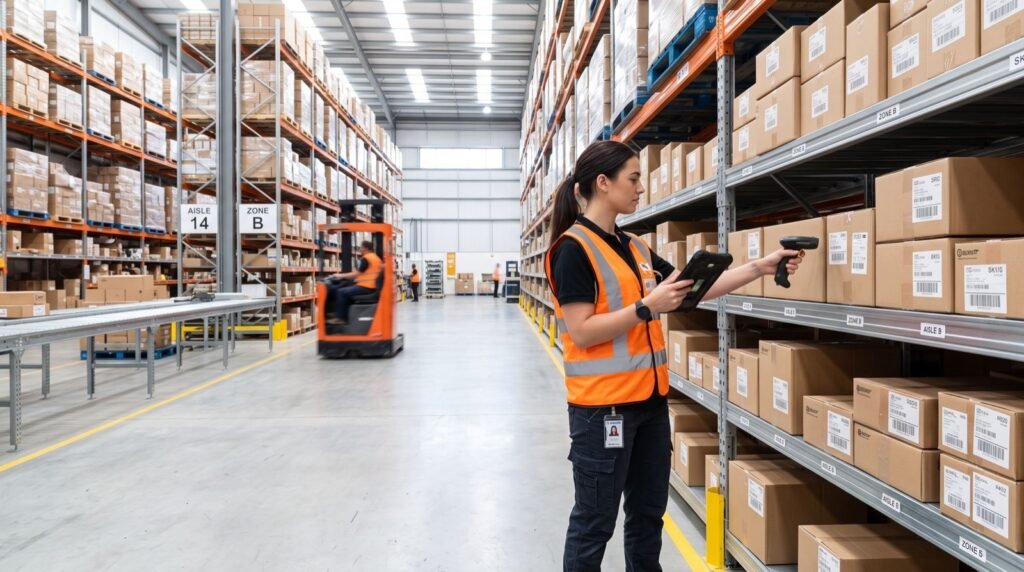
Specialist Storage for Wholesalers and Retailers is built around high turnover: wide aisles, pallet racking, barcode tracking, and loading bays sized for frequent inbound and outbound trucks. That design detail is what keeps your dispatch times low when order volume surges.
The 7 moves that cut cost and lift service
- Segment by velocity. Place fast movers near the dispatch door and slow movers deeper in the bay.
- Right-size your space. Pay for what you use with scalable units instead of a fixed oversized lease.
- Automate counts. Barcode or RFID scanning kills manual errors and speeds audits.
- Match the climate to the product. Not everything needs chilling, but some lines genuinely do.
- Consolidate suppliers. Cross-docking lets you combine inbound loads and ship mixed pallets.
- Protect perishables. Dedicated temperature zones stop spoilage eating your margin.
- Partner locally. Working with trusted professionals who know Saudi logistics avoids costly rookie mistakes.
Which storage type does each product need?
Choosing the wrong climate zone is the most common and most expensive error we see. Cooling costs money, so chill only what must be chilled. The table maps common wholesale and retail categories to the storage they actually require.
| Product category | Storage type | Typical shelf priority |
|---|---|---|
| Canned and packaged food | Dry / ambient | Medium turnover |
| Apparel and textiles | Dry, humidity-controlled | Seasonal |
| Dairy and fresh produce | Chilled (0-8 C) | High turnover |
| Meat, seafood, ice cream | Frozen (-18 C) | High turnover |
| Electronics and homeware | Dry, secure | Medium turnover |
Wholesalers handling meat, seafood, or frozen desserts should insist on certified Frozen Storage in Saudi Arabia with continuous temperature logging. The Saudi Food and Drug Authority treats the cold chain seriously, and gaps in it can trigger product loss and regulatory penalties.
How Vision 2030 reshapes retail warehousing
Saudi Arabia’s logistics capacity is expanding rapidly as the Kingdom positions itself as a regional distribution hub. The government’s Vision 2030 program funds new industrial cities, ports, and freight corridors, which means more modern warehouse space and better connectivity between Riyadh, Jeddah, and Dammam.
For wholesalers and retailers, the practical upshot is choice. You can now pick facilities close to your main customer clusters, use multiple smaller nodes instead of one giant warehouse, and negotiate shorter, more flexible contracts than were common five years ago.
An original tip: use a slow-season audit
Book a full inventory audit during your quietest month. When stock levels are low, discrepancies are easy to spot, dead SKUs stand out, and you can renegotiate space before the next peak. One retail client reclaimed 18% of their leased area this way and redirected the savings into faster delivery vans.
Signs you have outgrown your current storage
- Dispatch delays rise during normal, not peak, weeks
- Staff hunt for stock because locations are not mapped
- You routinely pay for space you do not fill
- Temperature-sensitive goods spoil before sale
- Stock counts never match the system
Any two of these together signal it is time to switch to a purpose-built, scalable facility.
Building a resilient fulfilment network
Single-warehouse thinking is fading fast. Forward-looking wholesalers and retailers now spread stock across two or three nodes placed near their biggest customer clusters. This cuts last-mile distance, reduces the risk of a single point of failure, and lets you promise faster delivery windows that win repeat business.
The trade-off is coordination. Multiple nodes only work if inventory is visible across all of them in one system, so you never oversell a line held in another city. Insist on a provider whose software gives you a single, live view of total stock, not separate spreadsheets per site.
Returns handling deserves a place in this plan too. E-commerce return rates can reach double digits, and a warehouse set up to inspect, restock, or quarantine returned goods quickly keeps that reverse flow from clogging your shelves. Ask any prospective partner how they process returns before you sign.
Measuring whether your storage pays off
Storage should earn its keep, so track it like any other investment. Three metrics tell you most of the story, and reviewing them monthly keeps costs honest.
- Inventory turnover: how many times you sell and replace stock per year. Higher is usually healthier.
- Cost per order shipped: total storage and handling spend divided by orders fulfilled. Watch the trend, not just the number.
- Order accuracy: the share of orders picked and shipped error-free. Poor accuracy signals layout or process problems.
When these numbers drift the wrong way, it is a prompt to revisit your layout, your climate zones, or your provider. Data beats gut feeling every time you negotiate a renewal.
Frequently Asked Questions
What is the best storage for wholesalers and retailers with mixed stock?
A multi-zone facility is ideal. It lets you keep dry, chilled, and frozen goods under one roof and one contract, so you avoid juggling several providers and duplicate paperwork.
How much warehouse space do I actually need?
Base it on peak-season volume plus about 15% buffer, then choose a provider that lets you scale down in quiet months. Paying for year-round peak capacity wastes money.
Is frozen storage necessary if I only sell a few frozen lines?
Yes, if those lines include meat, seafood, or ice cream. Even small volumes must stay at -18 C continuously, so use certified frozen storage rather than risk the cold chain.
Can I change my storage contract mid-year?
In 2026 most modern Saudi operators offer flexible monthly and seasonal terms, so you can expand for peak trading and contract afterward without heavy penalties.
Conclusion
The right storage for wholesalers and retailers protects both your cash flow and your reputation for availability. Segment by velocity, match each product to the correct climate zone, lean on flexible contracts, and audit during the quiet season. Do that, and your distribution business will enter every 2026 peak faster, leaner, and ready to outsell slower rivals.